Grading Day Starts Long Before Grading Day
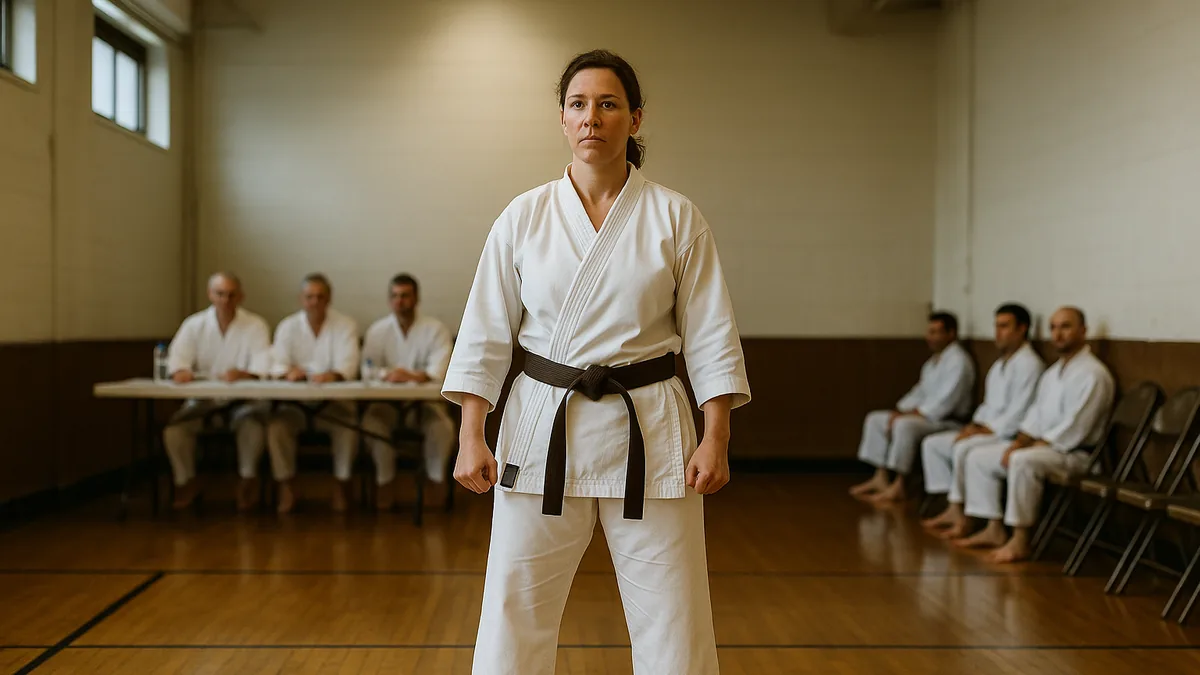
Most karateka treat a grading like an exam they can cram for. Train normally for months, hear the date announced, panic slightly, then drill everything twice as hard for a fortnight. It feels productive. It rarely produces the result you want.
The students who perform consistently well at gradings are not the ones who suddenly raise their game in the final weeks. They are the ones whose regular training was already at the right standard. That shift in thinking - from "grading preparation" as a separate phase to everyday training as the foundation - changes how you approach everything else.
Here is what that looks like in practice.
Getting Your Timeline Right
How far in advance you need to focus depends on where you are in your journey.
For lower kyu grades, four to six weeks of deliberate preparation on top of consistent attendance is generally enough. You know the syllabus. You have been drilling the techniques. What you need is refinement.
Brown belt is a different matter. Eight to twelve weeks is more realistic because the expectations shift. It is no longer just about whether you can execute the techniques - examiners want to see whether you understand them. That takes longer to develop than you can manufacture in a month.
For dan gradings, think in months rather than weeks. A sustained preparation phase of at least six months, with the final twelve weeks as the intensive period, is what serious preparation looks like at that level. If hearing the grading date makes you anxious, pay attention to that feeling. It is usually telling you something accurate.
Where to Put Your Practice Time
The most common preparation mistake is trying to cover everything. Students run through the entire syllabus every session, touching on every technique without genuinely improving any of them.
A more effective approach: identify your three weakest areas and put the majority of your focused time there. You know what they are. Your instructor has almost certainly told you. Whatever makes you uncomfortable is where the work needs to go.
The techniques you are already confident with need maintenance, not intensive drilling. A few clean repetitions to keep them sharp is sufficient.
Kihon deserves more attention than most people give it. There is nowhere to hide in a line of stepping punches. Every stance transition, every hip rotation, every hikite is visible. Many students spend most of their preparation time on kata because it feels like the hard part - but kihon is where marks quietly disappear.
For kata, do not just run through it start to finish every time. Break it into sections. Drill the transitions. Work the technically demanding moments in isolation before putting the whole thing back together.
For kumite, the goal is composure, not dominance. Examiners at kyu level want to see controlled technique applied against a moving target. Train your breathing. Train staying relaxed under pressure.
Managing the Mental Side
Many grading performances that go wrong are not really technical failures. The student could do the material in class. What happened on the day was tension, rushing, and a stress response that degraded everything.
The most practical thing you can do is simulate pressure before the grading itself. Ask to perform your kata in front of the class. Do your kihon while senior grades observe. Put yourself in situations where you feel watched and assessed. The discomfort decreases with repetition, and your body learns to keep functioning despite it.
Speed makes blanking worse. Students who rush through kata have no recovery time when something goes wrong. Train at a controlled tempo where each technique has space around it.
As for what to do when you are actually in front of the panel:
"The moment you start thinking about what the examiners are seeing, you've lost your focus."
Direct your attention inward - the feeling of the technique, the position of your body, the intent behind each movement. The quality that comes from that internal focus is what examiners will notice.
Your Pre-Grading Checklist
Take this to your next session and the week leading up to your grading.
- Identify your three weakest areas and make them your training priority from now
- Practise performing under observation - in front of the class, in front of senior grades, anywhere that creates real pressure
- Break your kata into sections and drill the difficult transitions separately
- Give kihon proper time - do not let it become an afterthought behind kata preparation
- In the final week, reduce volume but keep intensity - two or three focused repetitions beat fifteen tired ones
- Visualise your grading at a realistic tempo - mentally walk through each section at the pace you will actually perform it
- Arrive early and warm up properly before the grading begins
- Breathe deliberately before each section - slow, controlled, in through the nose and out through the mouth
- If you blank during kata, pause and reset - do not improvise; examiners watch how you recover
- If you do not pass, go back to class the following week - the gap the grading revealed is closed through training, not avoidance
For the complete version, with every drill explained, read How to Prepare for a Karate Grading on Karate Lifestyle.
Join the conversation: X · LinkedIn · Pinterest · Bluesky
More from Karate Lifestyle


Comments
Post a Comment