Fuelling Your Dojo Sessions: What Actually Matters
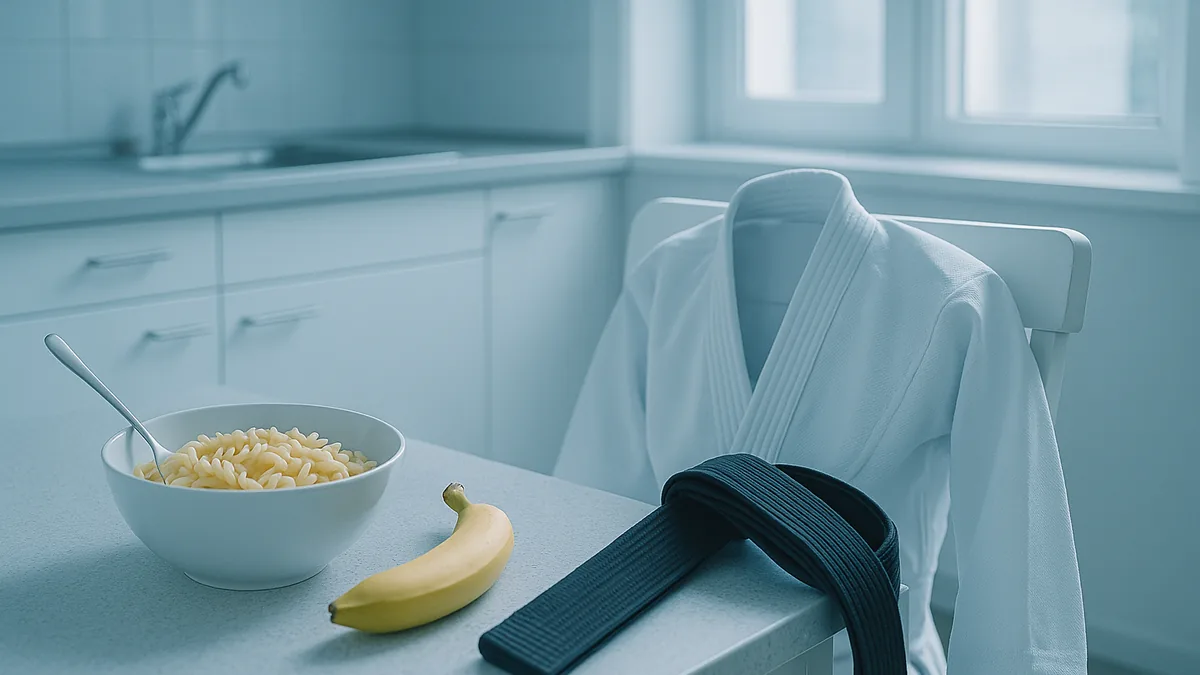
Most karateka put serious thought into their technique, their timing, their sparring game. Far fewer give the same attention to what they eat before they bow in - or what they do in the hour after they bow out. That gap shows up eventually, usually during grading prep or a hard kumite session when the legs go early and the mind follows.
This is not about obsessing over nutrition. It is about getting the basics right consistently, which matters far more than finding the perfect supplement or tracking every macro.
Timing Your Pre-Training Meal
What you eat before training matters. When you eat it matters just as much.
A carbohydrate-based meal - rice, pasta, potatoes, bread - eaten roughly two to three hours before your session gives your body time to digest and store that energy where it is needed. Eat too close to training and you will feel it: that heavy, uncomfortable sensation during fast combination work or the later rounds of sparring is usually a timing problem, not a food problem.
High-fat foods and very large meals are the main culprits. They take longer to clear the stomach, and during high-intensity work that delay becomes nausea, bloating, or just a general feeling of carrying too much weight. High-fibre foods can cause similar trouble - cramping in particular during hard, high-impact sessions.
The practical version of this for evening training: do not skip lunch, eat a large meal at six, and expect to feel good at half seven. A moderate meal three hours before training beats a large meal one hour before, every time.
For early morning sessions where a full meal is not realistic, something small is better than nothing. Starting a demanding session with your glycogen stores significantly depleted - as they are after an overnight fast - leaves you noticeably slower and mentally flatter than you would otherwise be.
Hydration: The Thing Nobody Gets Right
The signs of dehydration during a session are easy to miss until they are not: slightly slower reactions, foot cramps during kicking combinations, a headache on the drive home. By the time you feel genuinely thirsty mid-session, you are already behind.
Exercise performance can be impaired by a body weight fluid loss of as little as two percent. That is not a dramatic amount - it can happen across a normal training session without anyone noticing.
The correction is straightforward: drink water consistently through the day, starting well before you leave for the dojo. Trying to catch up in the hour before training does not work. Sip during the session when you can, and drink more afterwards.
For most karateka training several times a week, plain water is sufficient. Sports drinks are marketed heavily but their electrolyte content matters mainly in specific conditions - back-to-back matches at a tournament, intensive camps in heat, that kind of thing. A standard ninety-minute dojo session does not require anything beyond water.
Recovery: Where Gains Get Left Behind
The session ends, people chat, bow out, drive home, and eat whenever. Sometimes that is an hour later. Sometimes it is two hours. Sometimes people skip eating entirely because it is late and a full meal feels like too much effort.
This is where a lot of consistent training produces less return than it should.
Muscle repair and glycogen replenishment both happen after training, and what you eat in the following hour or two influences how you feel the next morning. The urgency of eating immediately after is lower than popular advice often suggests - if you ate a proper pre-training meal, the so-called anabolic window is not as narrow as gym culture implies. But eating something reasonable within one to two hours still makes practical sense, particularly after evening sessions.
It does not need to be elaborate. Greek yoghurt with fruit, eggs on toast, leftover rice with some protein - simple food that you will actually eat. The preparation part matters more than most people realise: if you get home at nine-thirty and have nothing ready, you will often just go to bed without eating. Having something sorted in advance removes that obstacle.
"Consistent basic nutrition beats perfect nutrition you cannot sustain - get the fundamentals right before worrying about anything else"
Checklist for Your Next Session
- Two to three hours before: eat a moderate, carbohydrate-based meal - rice, pasta, potatoes or bread with a light protein source
- Avoid high-fat and high-fibre foods in the hours before training; they slow digestion and cause discomfort during hard work
- Drink water steadily through the day - do not try to catch up in the final hour before the session
- Sip during training when you can, regardless of dojo culture around water breaks
- Prepare your recovery food in advance so you actually eat it when you get home, not two hours later
- Eat something within one to two hours of finishing - protein and carbohydrates, nothing complicated
- Skip the sports drinks for standard sessions; water covers what you need unless conditions are extreme
For the complete version, with every drill explained, read Nutrition for Karate Training on Karate Lifestyle.
Join the conversation: X · LinkedIn · Pinterest · Bluesky
More from Karate Lifestyle


Comments
Post a Comment