Dojo Etiquette: The Unwritten Standards That Define You Before You Throw a Punch
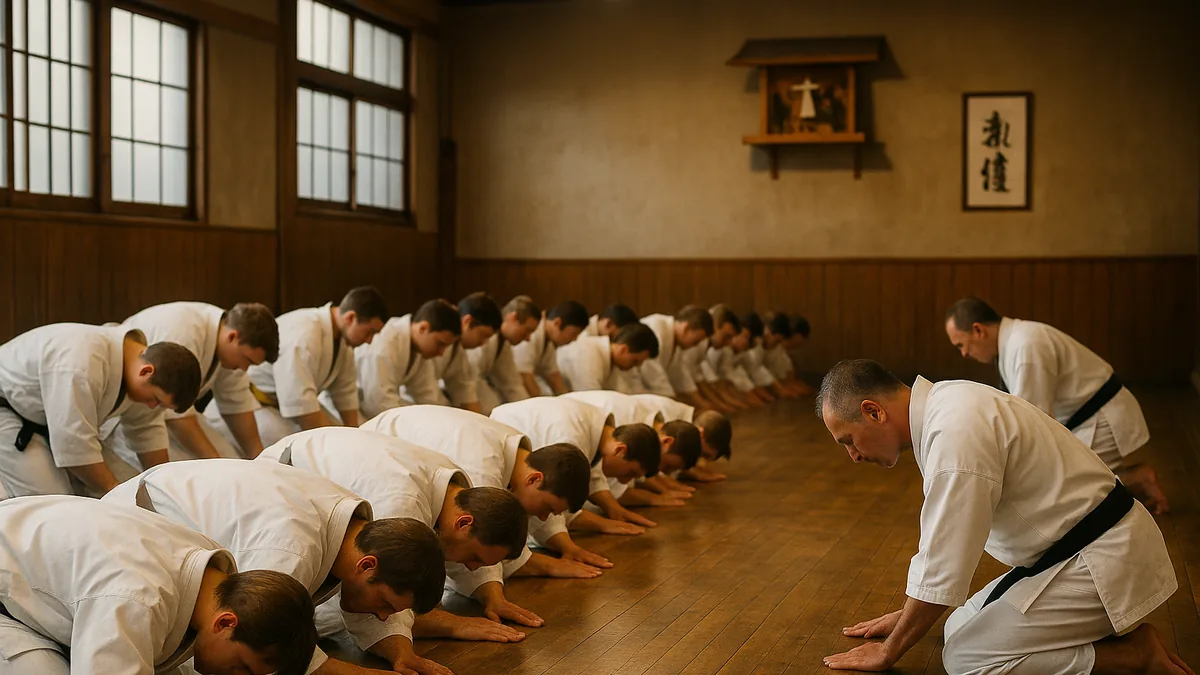
If you have just started karate, or you are a few grades in and still finding your feet, here is something worth knowing early: the seniors in your dojo have already formed an impression of you, and it has nothing to do with your technique yet. It is based on how you bow, what your gi looks like, and how you respond when someone corrects you. These things are not peripheral to your training. They are part of it.
The Bow Is a Mental Discipline, Not a Greeting
Most beginners treat bowing as something to get through so the actual training can begin. That instinct gets it backwards. The bow at the entrance to the dojo is a deliberate act of switching your attention - leaving whatever is going on outside and committing to being present in the room. A hurried dip of the head while still walking through the door does not go unnoticed. Everyone who has been training for any length of time reads it immediately.
The mechanics matter. A proper bow involves a straight back, hands flat against the thighs, and a genuine pause. It should feel intentional. The same applies when bowing to a training partner - do not glance away or start fiddling with your belt before the moment is finished. That small act of mutual acknowledgement is worth doing properly.
Bowing also applies more often than many beginners expect: entering and leaving the dojo, at the start and end of class, with a training partner before and after paired work, and when approaching or leaving a senior instructor.
Your Gi Says Something Before You Do
At a grading, an examiner has made an initial assessment before a single technique is performed. A clean, white, ironed gi communicates that you take the environment seriously. A grey, crumpled one communicates the opposite, regardless of what your karate actually looks like.
The practical standard is straightforward: wash your gi after every session. Do not leave it in your bag overnight - hang it out immediately or it will smell by morning. Avoid the tumble dryer if you want it to hold its shape. For gradings, iron it. It takes very little time and it will be noticed.
A few things that catch beginners out: wearing a coloured t-shirt underneath when the dojo expects white or nothing, letting the belt trail on the floor while tying it, and not realising that some dojos assess gi condition as a formal part of the grading process.
Hierarchy and How to Receive Correction
Adult beginners - particularly those who hold senior roles in their working lives - sometimes find dojo hierarchy uncomfortable. That resistance is understandable and also worth working through quickly. Rank in a dojo reflects accumulated training time, not status in the outside world. The brown belt running your warm-up has absorbed years of correction and repetition. That earns the right to lead the session.
The hierarchy also exists for practical reasons. When everyone feels entitled to correct everyone else, the training floor becomes difficult to navigate. A clear structure means instruction flows without confusion.
When a senior corrects you, the appropriate response is to acknowledge it and apply it - not to explain what you were attempting. The explanation might feel important to you in the moment. It is not helpful in that moment. Receive the correction, try it, and if you genuinely need clarification, ask after the drill has finished.
"The etiquette is not separate from the training. It is the training."
A Checklist to Take to Your Next Class
- Bow deliberately at the entrance, at the start and end of class, and with every training partner - slow it down, make it a genuine transition
- Check your gi before you leave the house: clean, white, and ironed for gradings; washed after every session regardless
- Remove all jewellery completely - rings, earrings, necklaces - not tucked or loosened, fully off, before you step on the mat
- Wait at the edge if you arrive late; catch the instructor's eye and wait for acknowledgement before joining the class
- Watch when someone demonstrates - stop moving, stop talking, and observe
- Receive corrections with "Oss" and apply them; save questions for after the drill or after class
- Check where you stand - observe where seniors and beginners position themselves before you pick your spot
- Use "Oss" with intention - it carries real meaning and overusing it as verbal filler empties it of that meaning entirely
For the complete version, with every drill explained, read Karate Etiquette: What You Need to Know on Karate Lifestyle.
Join the conversation: X · LinkedIn · Pinterest · Bluesky
More from Karate Lifestyle


Comments
Post a Comment