Counter-Attacking in Kumite: A Practical Guide for Brown Belts and Above
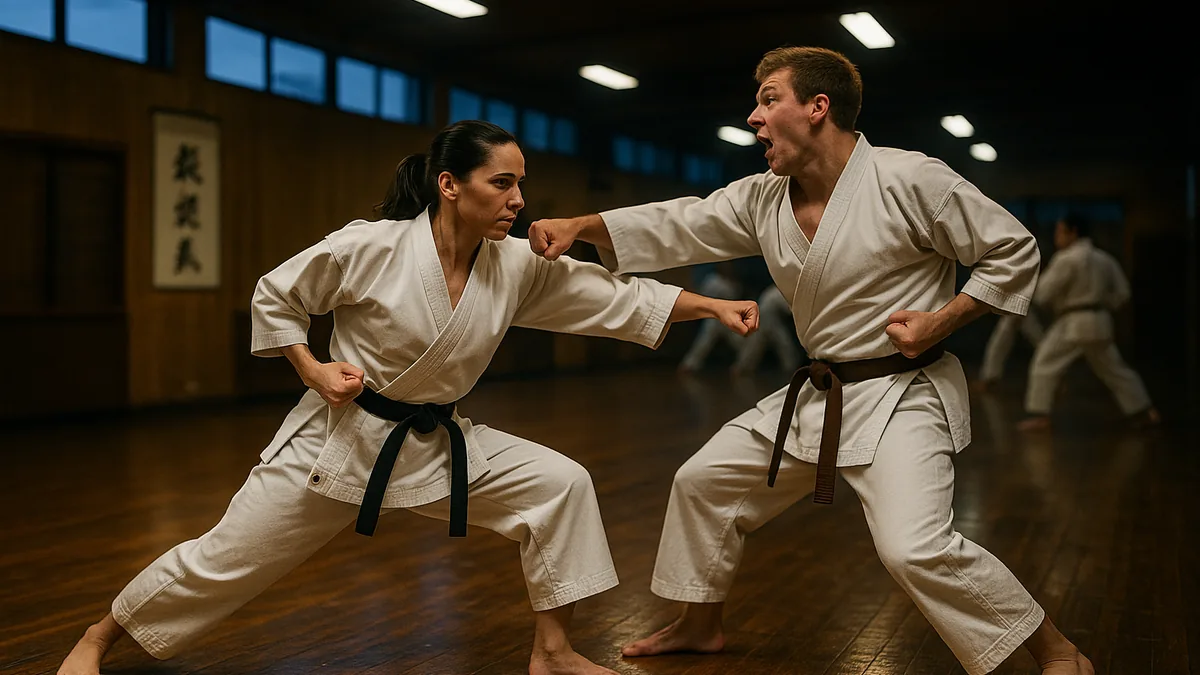
Most karateka arrive at brown belt having built their sparring around attacking well. Counter-attacking asks you to flip that entirely - to let your opponent carry the risk of initiating while you wait for the opening their commitment creates. This guide pulls out the practical core of the full article to help you take something concrete to your next session.
"Counter-attacking is not a defensive strategy. Done properly, it is the most efficient offensive strategy there is, because you are using your opponent's energy and commitment against them, and you are letting them take the risk of initiating."
The Three Timings Are Tools, Not Levels
Go no sen, sen no sen, and sen sen no sen are often taught as though they represent a progression - beginner, intermediate, advanced. That framing causes problems. They are better understood as three distinct tools, each suited to different opponents and different moments in a bout.
Go no sen is the block-and-counter rhythm most of us learn first. The danger is treating it as two separate beats: receive the attack, then respond. The evasion and the counter need to collapse into a single movement. If you are still doing them sequentially, you are absorbing the technique before you respond - which is not go no sen, it is just getting hit.
Sen no sen means intercepting the attack at the moment it launches, not after it arrives. You are reading the intention - the shoulder drop, the weight shift - and moving into it. This is what "attack the attack" means in practice.
Sen sen no sen looks like mind-reading but is not. It is pattern recognition built through hours of reading specific opponents. It only becomes available once you have already done the work on the earlier two timings. You cannot shortcut to it.
The practitioners who plateau are usually those who default permanently to one timing regardless of who is in front of them. Developing range across all three is what keeps you adaptable.
The Timing Windows - And the One Most People Miss
Every attack offers three windows for a counter: before commitment, during initiation, and on retraction. Most intermediate karateka chase the sen no sen window because it looks impressive. The retraction window - when the opponent's committed technique is pulling back, their guard is open and their weight is forward - is consistently underused and often more reliable.
Knowing these windows intellectually is not the same as feeling them under pressure. What actually builds that feeling is drilling against a partner who varies when they attack, not just what they attack with. If your partner always launches at the same moment in a predictable rhythm, you are training to anticipate a count. Variable timing forces you to read movement, which is the actual skill.
The Mistakes Worth Naming
Three errors come up repeatedly at this level.
Waiting for certainty before committing. By the time you are sure the window is open, it has already closed. Counter-attacking requires committing to a read before you have complete information. A committed wrong move disrupts your opponent's rhythm more than a hesitant correct one.
Countering without moving offline. You can drill a counter perfectly on the bag and then throw it in sparring while standing directly in the path of the incoming technique. The evasion and the counter are one movement. If you are still thinking of them as separate, that is the thing to fix first.
Telegraphing the counter. Eagerness to respond can mean you start preparing the technique while the attack is still being set up - a shoulder drop, a weight shift - and your opponent reads it and adjusts. If they can see your counter coming, you have already surrendered the advantage.
Checklist for Your Next Session
- Before sparring, decide which timing you are focusing on - go no sen, sen no sen, or sen sen no sen. Train it deliberately rather than defaulting to habit.
- In any counter drill, check whether you are reacting to a count or genuinely reading the initiation. If it is a count, ask your partner to vary their timing.
- After each exchange, ask: did the evasion and the counter happen together, or did I receive first and respond second?
- Look for the retraction window, especially against partners who overcommit to chudan attacks. Their guard is open and their weight is forward - use it.
- If you find yourself initiating constantly, sit with the discomfort of not doing so. Patience in sparring is trained, not innate.
- At the end of the session, note which opponents made sen sen no sen available through heavy telegraphing, and which forced you back to go no sen. That awareness is the beginning of reading people properly.
For the complete version, with every drill explained, read Counter-Attacking in Karate on Karate Lifestyle.
More from Karate Lifestyle


Comments
Post a Comment