Are You Actually Learning Kata, or Just Collecting Them?
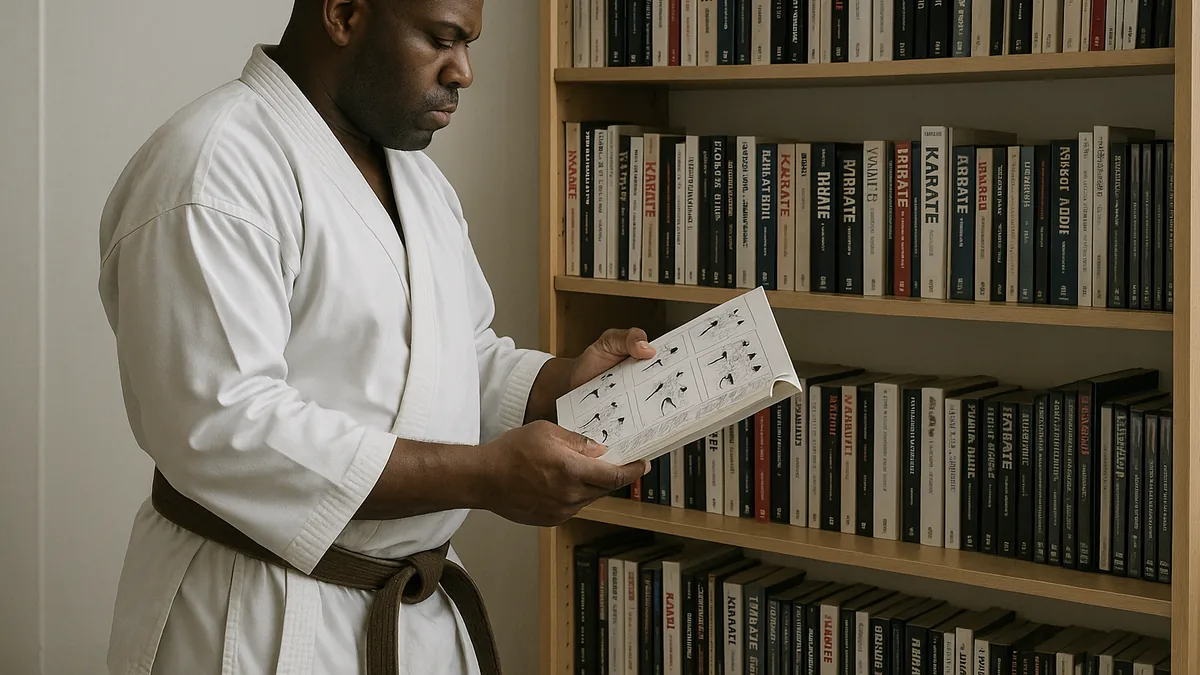
Most of us have been there: you can rattle off the names of a dozen kata, step through each one without hesitation, and still feel oddly hollow when someone asks what any of it actually means. That feeling is worth paying attention to. It usually signals that you have been adding forms to your repertoire without genuinely inhabiting any of them.
This guide draws on a longer piece published on KarateLifestyle.uk. It is aimed at anyone from kyu grade through to mid-dan level who suspects their kata training is wider than it is deep.
Why We Keep Adding Forms
Learning a new kata feels productive in a way that revisiting an old one simply does not. There is a clear moment of acquisition - you did not know this sequence yesterday, and now you do. That sense of progress is satisfying, and it is also somewhat misleading.
Grading structures make this worse. The typical association syllabus requires a new kata at each grade, which means both students and instructors are structurally incentivised to keep adding. No one earns a dan grade for knowing three kata with exceptional depth. The system rewards breadth, so breadth is what most people pursue.
The honest consequence is kata inflation: a growing list of forms that nobody, including the practitioner performing them, truly understands.
What Genuine Depth Actually Looks Like
It is easy to say "know your kata properly" without specifying what that means in practice. Here are concrete markers worth testing yourself against.
A practitioner with real depth in a kata can:
- Perform it under fatigue - after hard sparring, or when tired and cold - without the sequence falling apart
- Identify several credible applications for each significant movement, not just the one shown at grading
- Perform it mirrored - leading with the opposite hand and foot - without losing the structure (if this collapses, you know the choreography, not the kata)
- Explain the rhythm changes - why the pace shifts where it does, and what that represents in a physical exchange
- Self-assess accurately before an instructor points anything out
If you have fifteen kata in your catalogue and cannot do those things with more than one or two of them, you have a long to-do list, not a skill set.
The conceptual shift that tends to unlock this is understanding that a kata is not a performance to be polished. As the full article puts it:
"The kata is not the point. The kata is a container. What matters is what is inside it."
Once you train with that orientation - asking what each movement does against a resisting opponent rather than how it looks - your relationship with even familiar forms changes considerably.
Don't Abandon the Simpler Kata
One of the more common and costly mistakes is treating the Pinan or Heian series as beginner material to be set aside once you have graded past them. These forms were constructed with genuine martial logic, and their shorter length is not a sign of lesser content - it is a reason to look harder. Every transition is exposed. There is nowhere to hide a vague weight shift or an unconsidered chamber position.
A senior practitioner returning to Pinan Nidan with real attention will find things a beginner cannot, because the beginner does not yet have the questions. The difficulty of a kata's sequence is not the same thing as the depth of its content.
What Serious Practitioners Eventually Do
There is a recognisable pattern among practitioners who stay in karate long enough to reach fourth or fifth dan: they narrow their focus. The person who knew twenty kata at shodan often finds themselves returning repeatedly to four or five forms, not because the others lacked value, but because any single kata contains more than a lifetime of questions if you keep asking harder ones.
This is not regression. It is a considered judgement about where genuine development actually lives.
Checklist for Your Next Class
- Pick one kata you consider solid and film yourself performing it - then watch it back and ask whether you can justify every transition mechanically, not just aesthetically
- Test yourself mirrored - if the structure collapses when you lead with the other side, you have more work to do
- Revisit one kata you graded past - approach it as new material, not revision
- For one sequence in your chosen kata, name two applications - if you can only produce one, or none, that is your next training problem
- Before requesting a new kata from your instructor, ask honestly: do I have genuine depth in the ones I already know?
For the complete version, with every drill explained, read How Many Kata Should You Actually Know? The Case Against Collecting Forms on Karate Lifestyle.
Join the conversation: Facebook · X · Pinterest · Threads · Bluesky
More from Karate Lifestyle


Comments
Post a Comment