What Goes Under Your Gi Matters More Than You Think
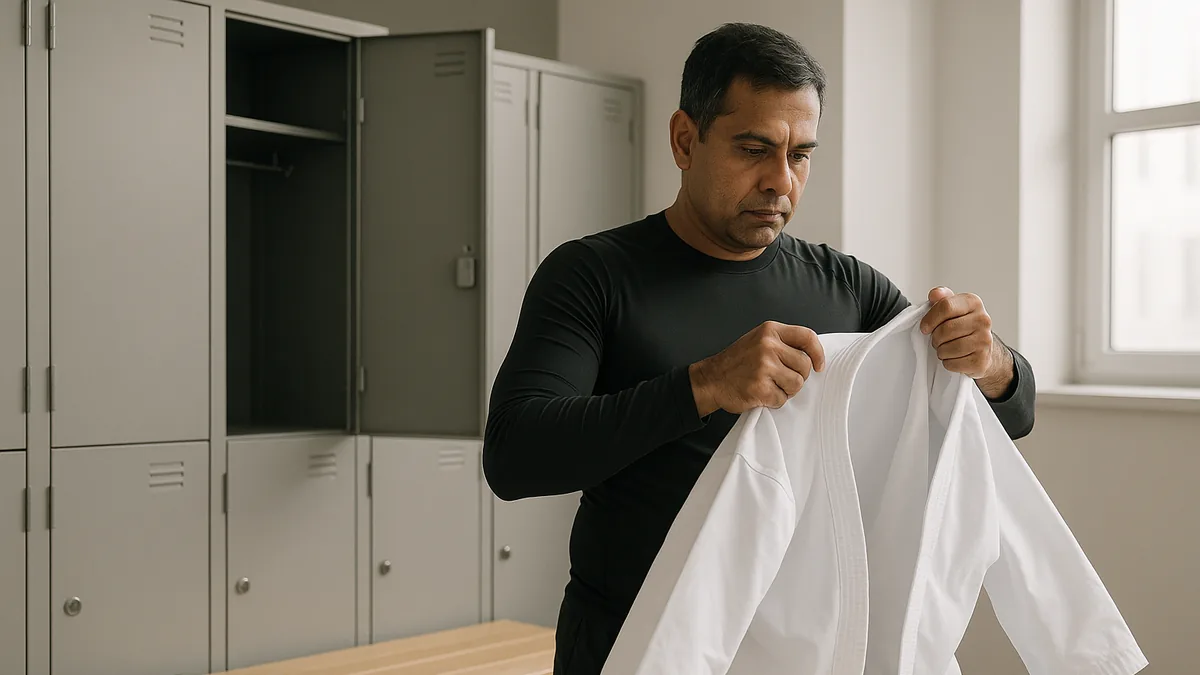
Most karateka spend real time and money choosing the right gi, then give almost no thought to what goes underneath it. That's a gap worth closing, because what sits between your skin and your gi affects how you move, how you feel thirty minutes into a hard session, and - let's be honest - how you smell to the person you're partnering with.
Here's a straightforward breakdown of what to think about before your next class.
Why the Base Layer Choice Actually Matters
The gi is not designed to be worn directly against bare skin for an extended session. Collar and lapel edges can chafe badly, particularly on a stiff new gi, and once you're doing repetitive technique work the friction adds up quickly. Beyond comfort, there are practical effects on movement: a base layer that bunches or restricts you is a distraction you don't need when you're trying to build clean technique.
The fabric you choose matters significantly. Cotton absorbs sweat and holds it, so a cotton t-shirt gets progressively heavier through a session and stays damp against your skin. A lightweight polyester or nylon moisture-wicking fabric pulls sweat away instead. For most people training regularly, synthetic wicking fabric is simply the more practical choice.
Fit matters just as much as fabric. A loose t-shirt will bunch under your gi jacket during twisting and bending movements - you'll feel it pulling across your back and gathering at your waist. A fitted cut stays in place and doesn't interfere with how your gi sits.
On colour: white under a white gi, and nothing that's going to be conspicuous when your jacket moves. Most clubs expect this, and showing up with something brightly coloured visible underneath marks you as someone who hasn't thought it through.
Adjusting for Season
In summer, the temptation is to wear as little as possible. The problem is that bare skin against gi fabric, once you're sweating, creates more friction and irritation than a thin wicking layer would. Go as light as you can find, but keep the base layer - it's doing useful work even in heat.
Winter in a British sports hall is a different challenge entirely. The answer is not to pile on thick layers - it's to choose a base layer with a little more thermal weight, the kind designed for running or cycling in cold conditions. The goal is to stay warm at the start of class without overheating once training is properly underway. If you get too warm, you can't easily strip a layer mid-session without disrupting everything. A lightweight thermal that does its job in the first twenty minutes and breathes well after that is what you're looking for.
For practitioners whose bodies take longer to warm up - particularly those training hard into their forties and beyond - managing warmth at the start of class genuinely matters for injury prevention. Cold muscles and cold joints do not respond well to explosive technique.
Rash Guards and Compression: What's Worth It
Rash guards have found their way into karate dojos from BJJ and MMA, and for the most part that's a sensible crossover. A long-sleeve rash guard protects your forearms during blocking drills and partner work, and a good one manages sweat well. The key word is thin. Rash guards made for mat-based sports are often heavier than you need, and a thick rash guard under a gi jacket can restrict your elbow extension at the end of a punch. You'll feel it as a tightness at full extension - not what you want when you're developing clean tsuki. Choose something specifically designed to sit under a gi, and check that it doesn't add bulk to your sleeve.
Compression shorts and leggings under gi trousers are worth taking seriously, particularly if you're doing a lot of deep stance work or kicking, or if your legs take time to feel ready. The support around the quads and hamstrings during repeated dynamic movement is real and noticeable. Gi trousers are cut generously and don't always stay in place - compression leggings solve that without adding bulk.
"A karateka who trains better because they're warm, supported, and comfortable is serving the art better than one who's cold and chafed out of principle."
Check your club's expectations before committing to coloured compression gear. Traditional clubs tend to be strict about the uniform looking uniform. More modern or sport-focused dojos are generally relaxed about it. When in doubt, plain and white is always safe.
Before Your Next Class: A Quick Checklist
- Fabric: Choose a moisture-wicking synthetic over cotton for regular training
- Fit: Go fitted, not loose - bunching under the gi is distracting and avoidable
- Colour: White under a white gi; check club expectations before anything else
- Season: Lightweight thermal for cold halls in winter; the thinnest wicking layer you can find in summer
- Rash guards: Thin enough that it doesn't restrict your arm movement at full extension
- Compression shorts: Worth trying if you do heavy stance or kicking work, or if your legs are slow to warm up
- Hygiene: Wash your base layer after every single session - synthetic fabrics hold odour in a way that airing out does not fix, and your training partners will notice before you do
For the complete version, with every drill explained, read What To Wear Under A Karate Gi on Karate Lifestyle.
Join the conversation: Instagram · X · Pinterest · Threads · Bluesky · YouTube
More from Karate Lifestyle


Comments
Post a Comment