Karate After 40: Training Smarter as Your Body Changes
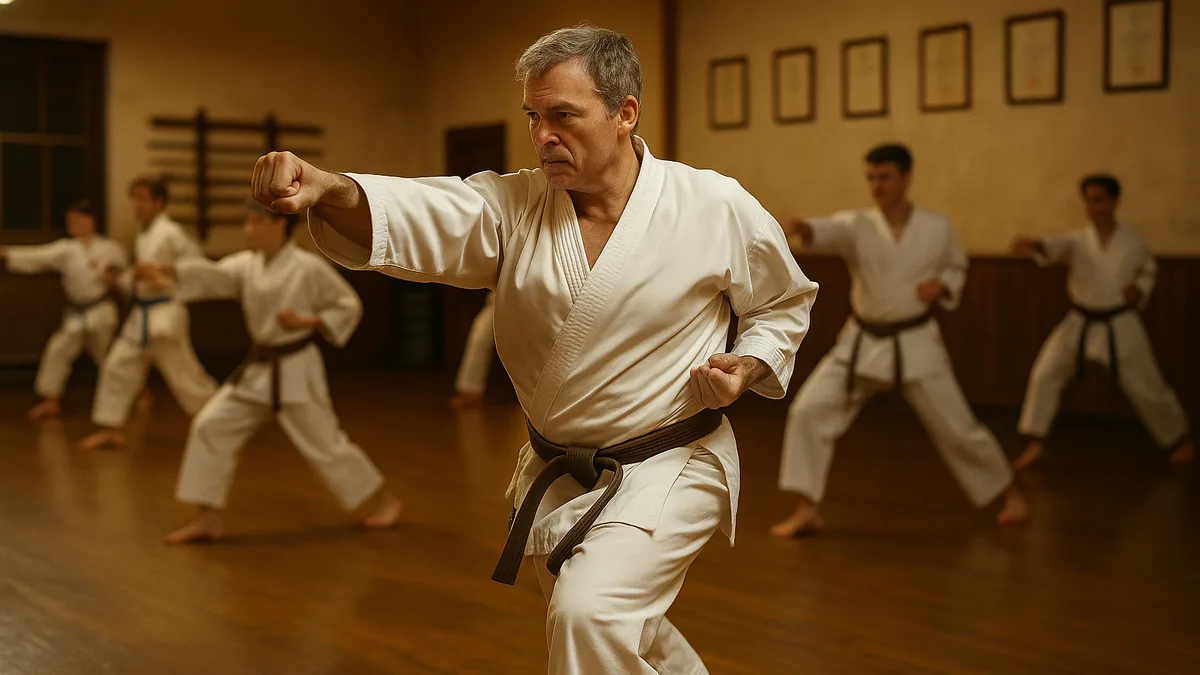
Somewhere along the way, karate earned a reputation as something you do when you're young and abandon when life gets in the way. That reputation is wrong. Plenty of the most technically accomplished people in any dojo are over 40 - some started there. The question isn't whether you can train past a certain age. It's how to do it without working against yourself.
Here's a practical look at what that actually means on the dojo floor.
Why Maturity Works in Your Favour
Karate is not primarily an athletic pursuit, even if it can look like one. The qualities that make a karateka genuinely good - reading distance, refining timing, understanding why a technique works rather than just forcing it through - these are things that develop over years, not months.
When you can no longer rely on being faster or stronger than the person across from you, you start paying closer attention to how you move. That shift in focus tends to produce better karate, not worse.
"Older practitioners often develop better technique precisely because they cannot rely on speed and power alone."
That isn't consolation. It's simply what tends to happen.
Adjusting How You Train
The structure of karate is more adaptable than most sports. You can modify stance depth to reduce strain on knees and hips. You can control sparring intensity so it remains useful without becoming a test of who recovers fastest. None of this compromises the integrity of what you're doing - it just makes it sustainable.
Two changes matter more than anything else once you're past 40:
- Warm up properly. Ten to fifteen minutes of mobility work before you throw a single technique is not optional. Cold joints and explosive movement are a poor combination, and the older you get, the more clearly your body makes that point.
- Train less, but better. Recovery between sessions takes longer than it did at 25. Two or three focused sessions a week will likely serve you better than five hurried ones that leave you too tired to train with any quality.
Slow Training and the Precision Habit
One of the more useful shifts you can make is deliberately slowing things down. Slow training forces you to feel what your body is actually doing rather than rushing through a technique and hoping it lands. The precision you build at slow speed carries over when you pick up the pace - it builds genuine speed, not just the appearance of it.
This is easier to accept once you stop measuring yourself against how you trained at 25. The goal isn't to replicate that. The goal is to train well now.
Knowing When to Push and When to Rest
This one takes practice to get right. Minor discomfort during training - muscle fatigue, a bit of stiffness - is part of the process. Pain that sharpens when you load a joint, or that persists after training, is telling you something different. Learning to distinguish between the two is a genuine skill, and respecting that distinction is what keeps you training consistently over the long term rather than stopping and starting around injuries.
Take this to your next class:
- Arrive early and spend 10-15 minutes on mobility before the warm-up begins
- If you trained yesterday and feel it, consider whether today's session needs to be lighter
- Pick one technique and spend part of the session doing it slowly, with full attention on each movement
- In sparring, set your own intensity - there's no obligation to match someone half your age
- Notice the difference between discomfort and pain during training, and act on it
- After class, ask yourself whether you trained with quality - not just whether you turned up
For the complete version, with every drill explained, read Training Karate After 40 on Karate Lifestyle.
More from Karate Lifestyle


Comments
Post a Comment