Gi Weight Is a Training Decision, Not a Style Preference
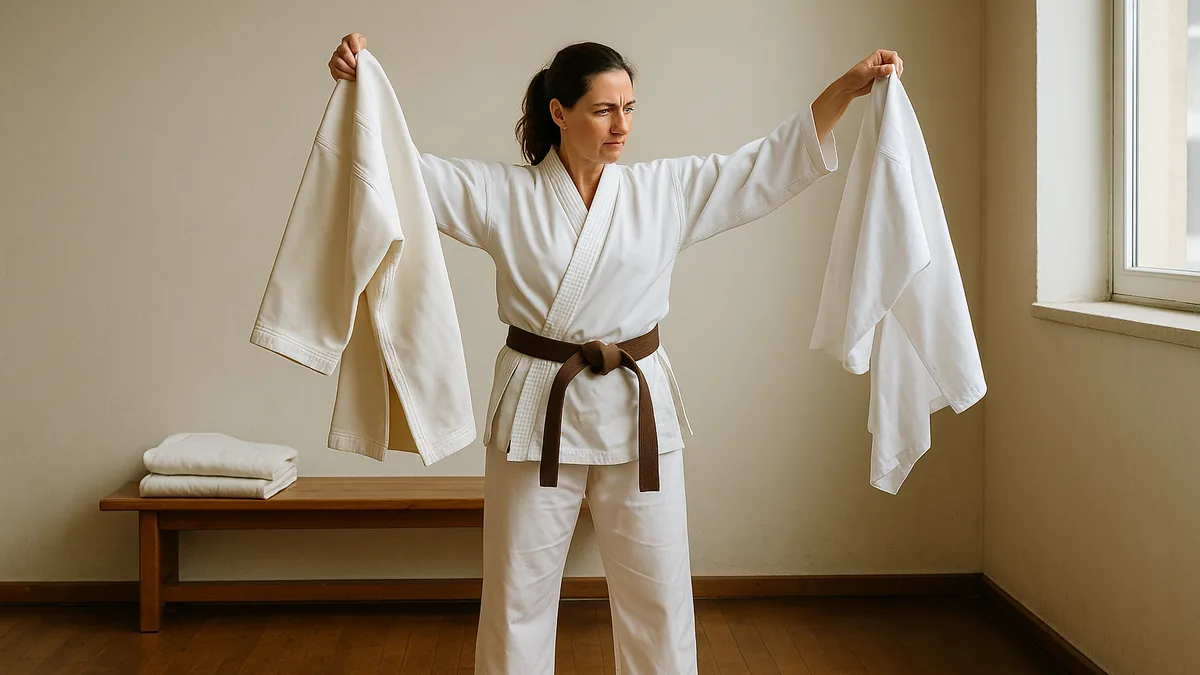
Most practitioners spend more time agonising over gi brands than gi weight, which is roughly the wrong way round. Weight is the variable that actually changes how your body moves, how fast you fatigue, and whether your technique is being built or just disguised. Getting this right matters at every grade.
Why Gi Weight Changes How You Train
The fabric weight of a gi - measured in ounces per square yard - runs from around 6oz at the lighter end to 16oz at the heavier end, with midweight options sitting somewhere in the middle. But the number alone is only part of the picture. Weave type and cotton quality both affect how a gi behaves in practice, so two gi with the same weight on paper can feel quite different on the floor.
What matters practically is the resistance the fabric creates when you move. A lighter gi follows your body through a technique. A heavier one pushes back. Neither of those is a flaw - they're different tools, and the mistake is treating one as universally better than the other.
This is where a lot of students go wrong. They see competition gi on senior grades or in tournament footage and assume that lighter means more advanced. It doesn't. What it means is that the gi is suited to a specific context.
The Case for Training in a Heavier Gi
Regular dojo training - kihon, kata, partner drills - is where a midweight or heavyweight gi earns its place. The resistance it creates during high-repetition work builds muscular endurance that a lighter gi simply does not. Train consistently in a heavier gi and then put on a competition-weight gi before an event, and the speed difference is not imaginary. It is the result of contrast conditioning: your body has been working harder than it needed to, and suddenly it does not have to.
There is also a mechanics argument. A heavier gi does not hide lazy technique the way a lighter one can. If your rotation is incomplete or your chambering is off, the fabric makes that more apparent, not less.
For any training that involves partner contact - grabs, lapel work, close-range drills - fabric weight matters for a more basic reason: lightweight material slips, bunches, and tears. You need something with enough substance to grip and hold without falling apart.
When Lightweight Gi Makes Sense
Competition is the obvious answer, and it is the right one. In jiyu-kumite especially, the ability to reset quickly after a failed attack can determine whether a counter lands. If the fabric is working against that movement, fractions of a second are lost. A lightweight gi removes that friction.
"Lightweight gi reward good technique. They don't build it."
That distinction matters for students who are still developing their basics. A lightweight gi worn too early can make technique feel sharper without actually being sharper - the reduced resistance flatters incomplete mechanics rather than exposing them. Used at the right stage, though, a lightweight gi is an honest diagnostic tool: there is nowhere for sloppy movement to hide.
High-repetition kihon sessions and hot training environments are also legitimate reasons to reach for a lighter gi. The key is being deliberate about why you are making the choice.
A Checklist for Your Next Class
- What is this session primarily for? Foundational training, partner work, and kata favour midweight or heavyweight. Competition-specific preparation favours lightweight.
- Are your basics solid enough for lightweight? If you are still building mechanics, a heavier gi will serve your development better.
- Does your training involve any grabs or close-range partner work? If so, lightweight fabric is likely to cause problems.
- Have you accounted for shrinkage? Heavyweight cotton gi shrink significantly after the first wash. Buy slightly larger than you think you need, wash cold, and hang dry.
- Do you compete? If yes, a dedicated lightweight competition gi is worth having as a second gi - not instead of a training gi, alongside it.
- When did you last reassess your choice? What suited your training at one grade or one decade may not suit it now. The resistance that conditions you at 25 can become a liability at 50. Revisit the decision as your training life changes.
For the complete version, with every drill explained, read Lightweight vs Heavyweight Karate Gi on Karate Lifestyle.
Join the conversation: Instagram · X · Threads · Bluesky · YouTube
More from Karate Lifestyle


Comments
Post a Comment